ESAB is proud to support the next chapter of human space exploration through its advanced friction stir welding technology, which has contributed to manufacturing critical structures for NASA’s Artemis II mission.
As part of the Artemis program, designed to return humans to the moon and prepare for future missions to Mars, precision manufacturing plays a vital role in ensuring safety, performance and reliability in extreme environments. Friction stir welding — an advanced solid-state joining process — has become an essential technology for producing large, high-strength aluminum structures used in spaceflight applications.
At NASA’s Michoud Assembly Facility, friction stir welding is used to join major structural components, including elements of the Orion crew module pressure vessel. This process enables the welding of large aluminum alloy sections into a lightweight, airtight structure designed to protect astronauts during deep space missions.
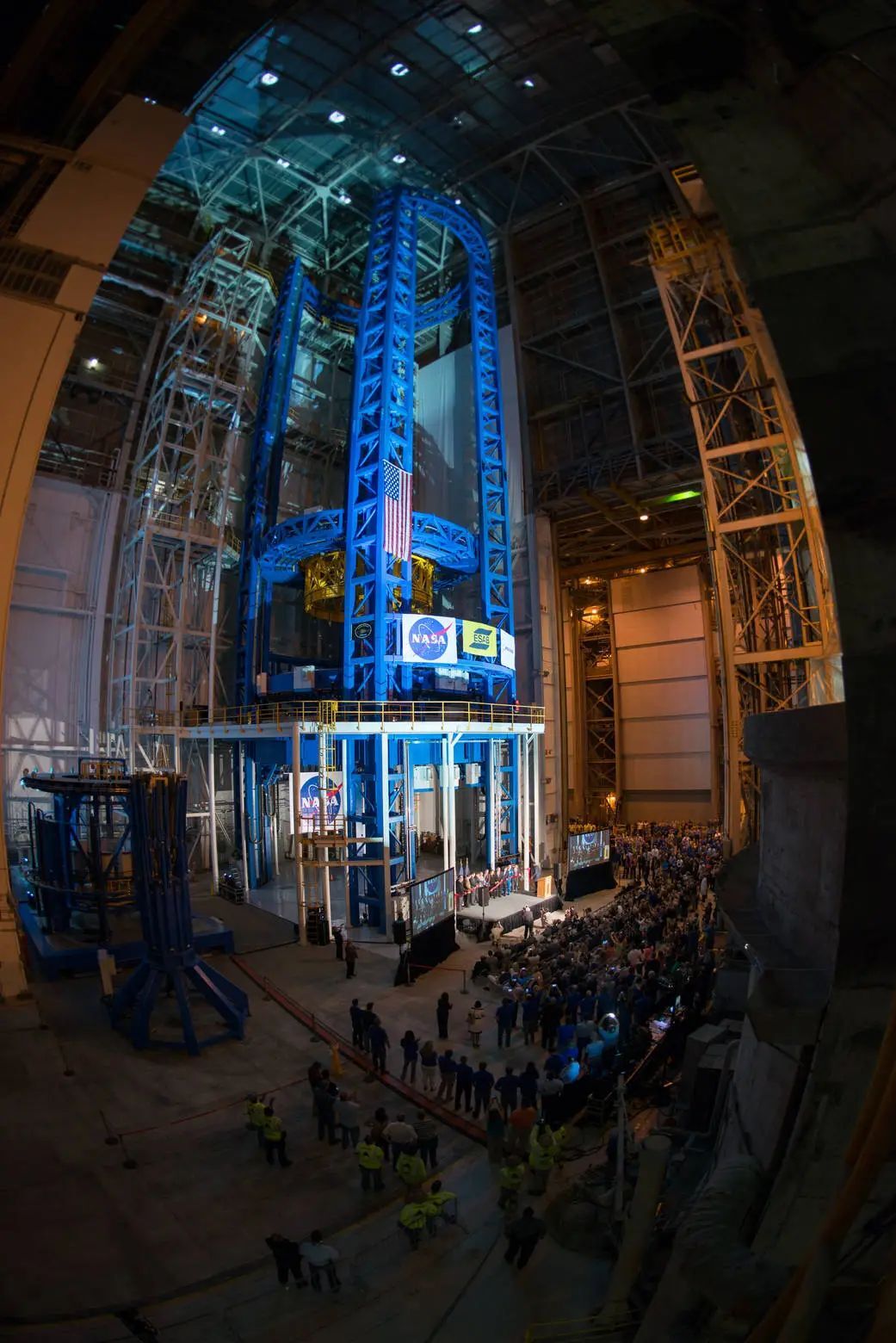
A key enabler of this work is the Vertical Assembly Center at NASA’s Michoud Assembly Facility in New Orleans. Recognized as the world’s largest spacecraft welding tool, the system measures about 170 feet tall and 78 feet wide and is used to weld major components of the Space Launch System core stage. ESAB supported the development of this capability by providing structural steel services for the platform and tower structure that underpin the system’s operation, helping enable welding at an unprecedented scale.
Originally developed for high-performance aerospace applications, friction stir welding offers several advantages over traditional welding methods. By generating less heat during the process, it produces stronger, more consistent welds while minimizing distortion — critical factors when working with large-scale, mission-critical components.
ESAB has been at the forefront of advancing friction stir welding technology for decades, developing purpose-built systems capable of delivering the precision, repeatability and scale required for complex fabrication challenges.
“Our focus has always been on helping customers solve complex manufacturing challenges, no matter the scale,” said Antonio Leon, ESAB vice president of heavy fabrication and global partnerships. “From concept through production, we work side by side with our customers to deliver solutions they can rely on for long-term programs like Artemis.”
“Operational reliability is essential in programs where there is no margin for error,” said Christopher Young, ESAB global customer success manager. “Our focus is on ensuring that the welding process meets the rigorous standards required for human spaceflight.”
The Artemis II mission is the first crewed flight of NASA’s Space Launch System, marking a major milestone in advancing human exploration beyond low Earth orbit. ESAB is honored to contribute to this effort and support the broader goal of enabling safe, sustainable space exploration.
As industries continue to push the boundaries of what is possible, ESAB remains committed to delivering advanced fabrication solutions that help customers solve complex challenges — on Earth and beyond.
 English